
Back to Blog Index
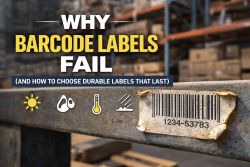
Why Barcode Labels Fail (And How to Choose Durable Labels That Last)
Barcode labels are used everywhere—from manufacturing equipment and warehouse racks to hospital devices and IT assets. When they work properly, barcode labels make asset tracking fast and reliable.
But when labels begin to peel, fade, or become unreadable, they can create serious problems. Equipment can't be scanned, inventory systems break down, and valuable time is spent replacing damaged labels.
Understanding why barcode labels fail can help you choose durable barcode labels that last for years instead of months.
1. Adhesive Failure – When Labels Peel Off Equipment
One of the most common problems with barcode labels is adhesive failure. Over time, labels may begin to peel at the edges or completely fall off equipment.
This usually happens when labels are applied to difficult surfaces such as:
- rough metal surfaces
- oily machinery
- powder-coated equipment
- low-energy plastics
Temperature changes can also weaken adhesives. Equipment that heats and cools repeatedly can slowly break down the adhesive bond.
How to prevent this problem: Choose industrial barcode labels with high-performance adhesives designed for metal, plastic, and textured surfaces. Proper surface cleaning before applying the label also improves adhesion.
2. UV Exposure and Sunlight Damage
If barcode labels are exposed to sunlight, the printed barcode can eventually fade. When this happens, scanners can no longer read the barcode reliably.
Outdoor environments that often cause fading include:
- construction equipment
- agricultural equipment
- utility infrastructure
- outdoor warehouse racks
How to prevent fading: Use UV-resistant barcode labels or labels with protective laminates designed for outdoor use.
3. Chemical Exposure
In many industrial settings, labels come into contact with chemicals such as solvents, oils, cleaning agents, and disinfectants.
These substances can damage both the adhesive and the printed barcode.
Facilities that frequently experience this problem include:
- manufacturing plants
- laboratories
- hospitals
- automotive facilities
How to prevent chemical damage: Choose chemical-resistant barcode labels designed to withstand oils, solvents, and cleaning agents.
4. Abrasion and Physical Wear
Barcode labels on equipment often experience constant physical contact.
Common causes of abrasion include:
- forklifts scraping warehouse racks
- pallets rubbing against labels
- tools and machinery contacting labels
Over time, friction can wear away the barcode or damage the label surface.
How to prevent abrasion damage: Use laminated barcode labels or labels designed specifically for high-wear environments.
5. Temperature Extremes
Some environments expose barcode labels to extreme temperatures.
Examples include:
- freezer storage facilities
- high-heat manufacturing equipment
- outdoor environments with large temperature swings
Extreme temperatures can cause adhesives to weaken or label materials to crack.
How to prevent temperature damage: Choose barcode labels engineered for high-temperature or low-temperature environments.
Choosing the Right Durable Barcode Labels
Selecting the right label depends on the environment where it will be used.
Important factors include:
- surface type
- exposure to sunlight
- chemical exposure
- abrasion risk
- temperature conditions
For equipment tracking and industrial applications, durable asset barcode labels are often the best choice.
Durable Barcode Labels for Asset Tracking
Organizations that rely on asset tracking—such as hospitals, universities, warehouses, and manufacturing facilities—need labels that remain readable for years.
Industrial-grade barcode labels are designed to withstand harsh environments, frequent handling, outdoor conditions, and cleaning chemicals.
Choosing the right label material can significantly reduce the cost and time spent replacing damaged labels.
Back to Blog Index Read what Customers are Saying!
4.97 Star Rating Based on 241 Reviews